Easy Crockpot Beef Tallow
If you’ve never made beef tallow before, don’t let it intimidate you. It’s really just a slow process of melting down beef fat and straining out the solids. Most of the work is done by the crockpot while you go about your day.
Tallow has been used for generations in cooking, soap making, skincare products, candles, and more. The finished product is shelf-stable, versatile, and incredibly satisfying to make yourself.
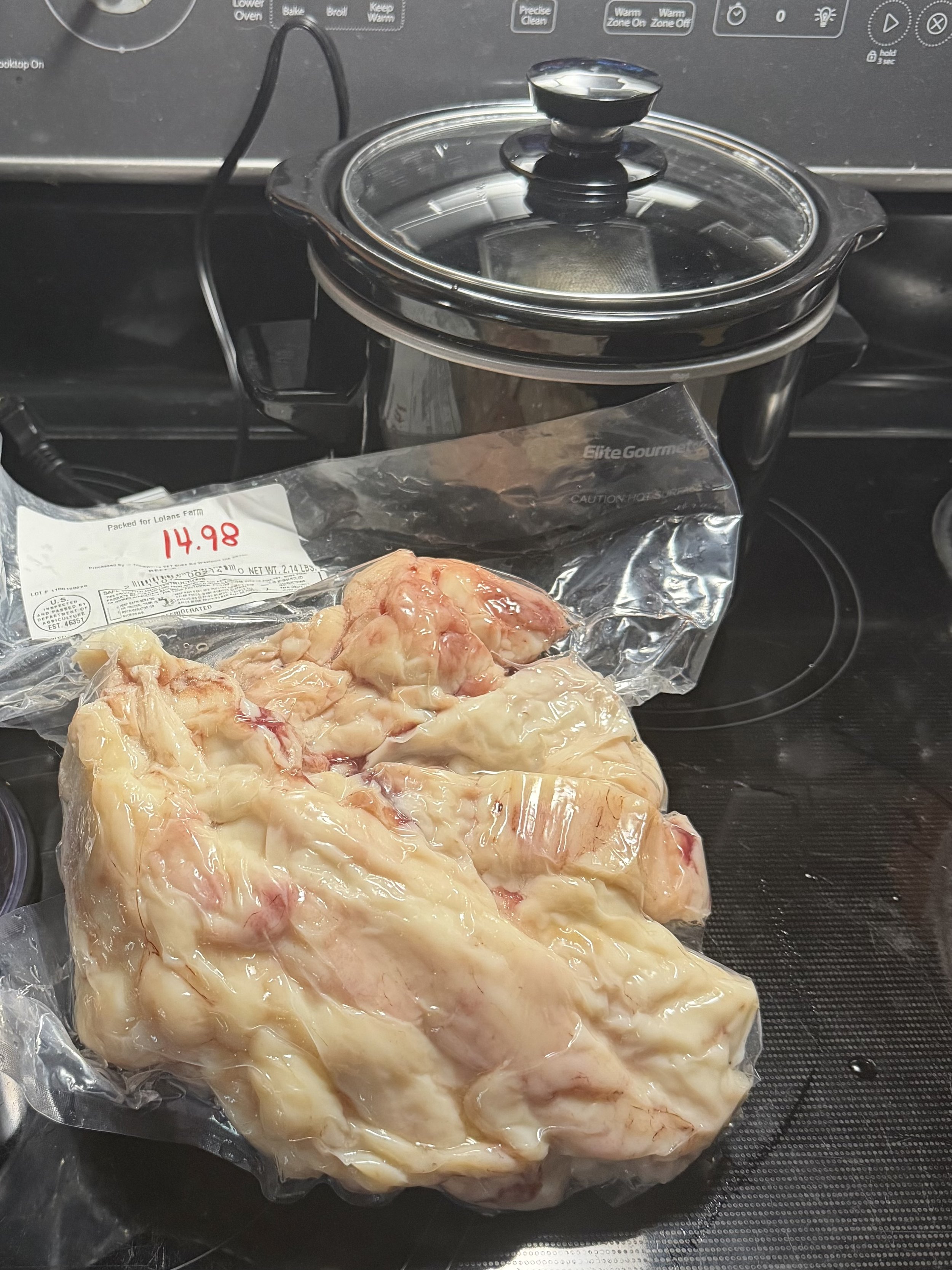
The best part? All you need is some Lolans Farm beef suet, a crockpot, and a little patience.
What You’ll Need
Lolans Farm beef suet
Crockpot
Sharp knife (or food processor)
Fine mesh strainer
Cheesecloth, coffee filter, or paper towel
Glass jars for storage
Step 1: Prep the Suet
Take your frozen beef suet out the day you plan to make tallow.
You don’t want it fully thawed—just soft enough to cut safely and comfortably.
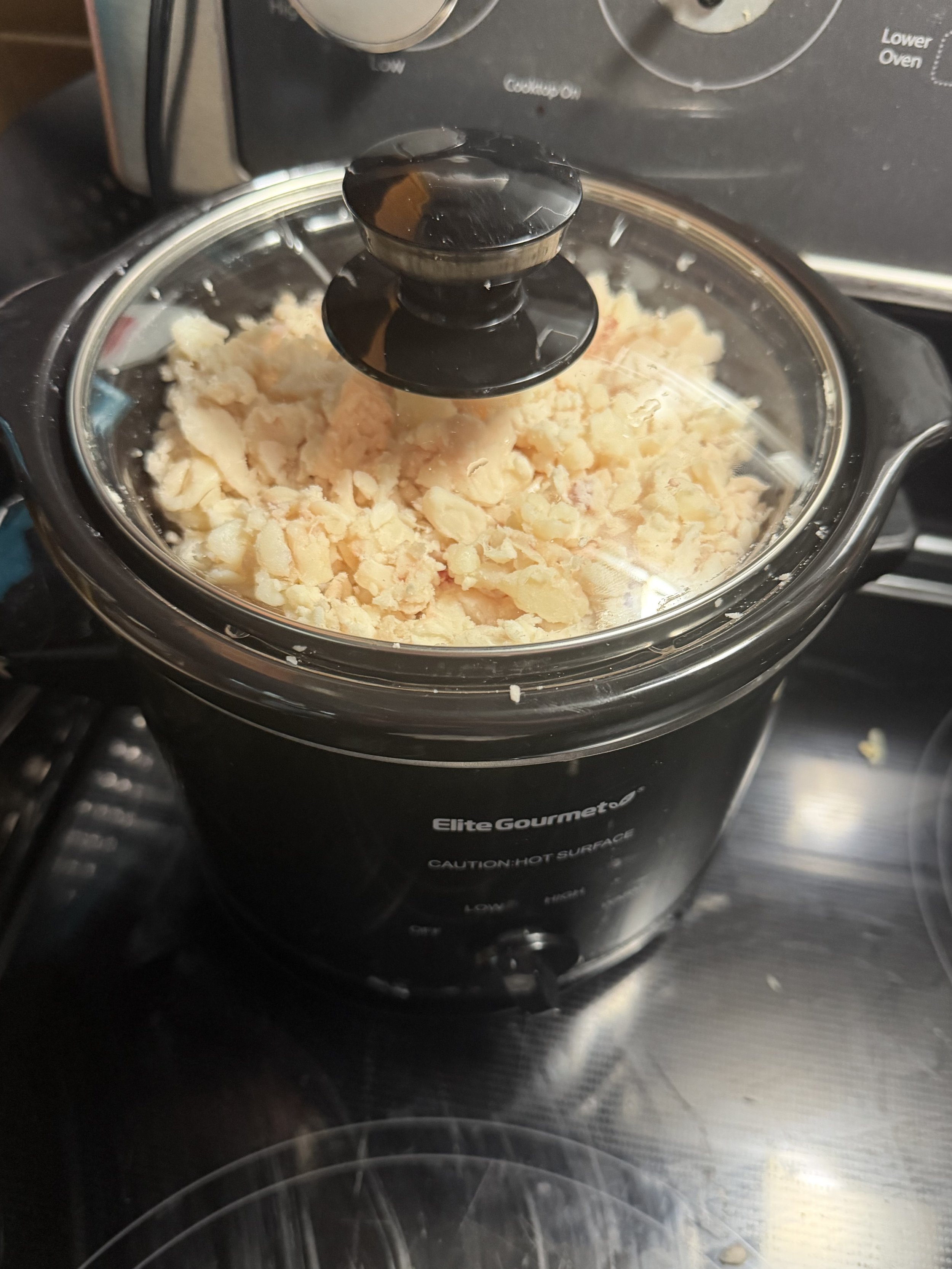
Using a knife, cut the suet into roughly 1-inch pieces. Smaller pieces will render faster and more efficiently, but perfection isn’t required.
If you’d rather speed things up, a food processor works great too.
Step 2: Load the Crockpot
Place the chopped suet into your crockpot.
Set it to Low and let it slowly render.
The exact time can vary quite a bit depending on:
How small the pieces are
Your crockpot model
How much suet you’re rendering
The shape and surface area of the crockpot
Most batches take somewhere between 4 and 12 hours.
Step 3: Wait for the Magic
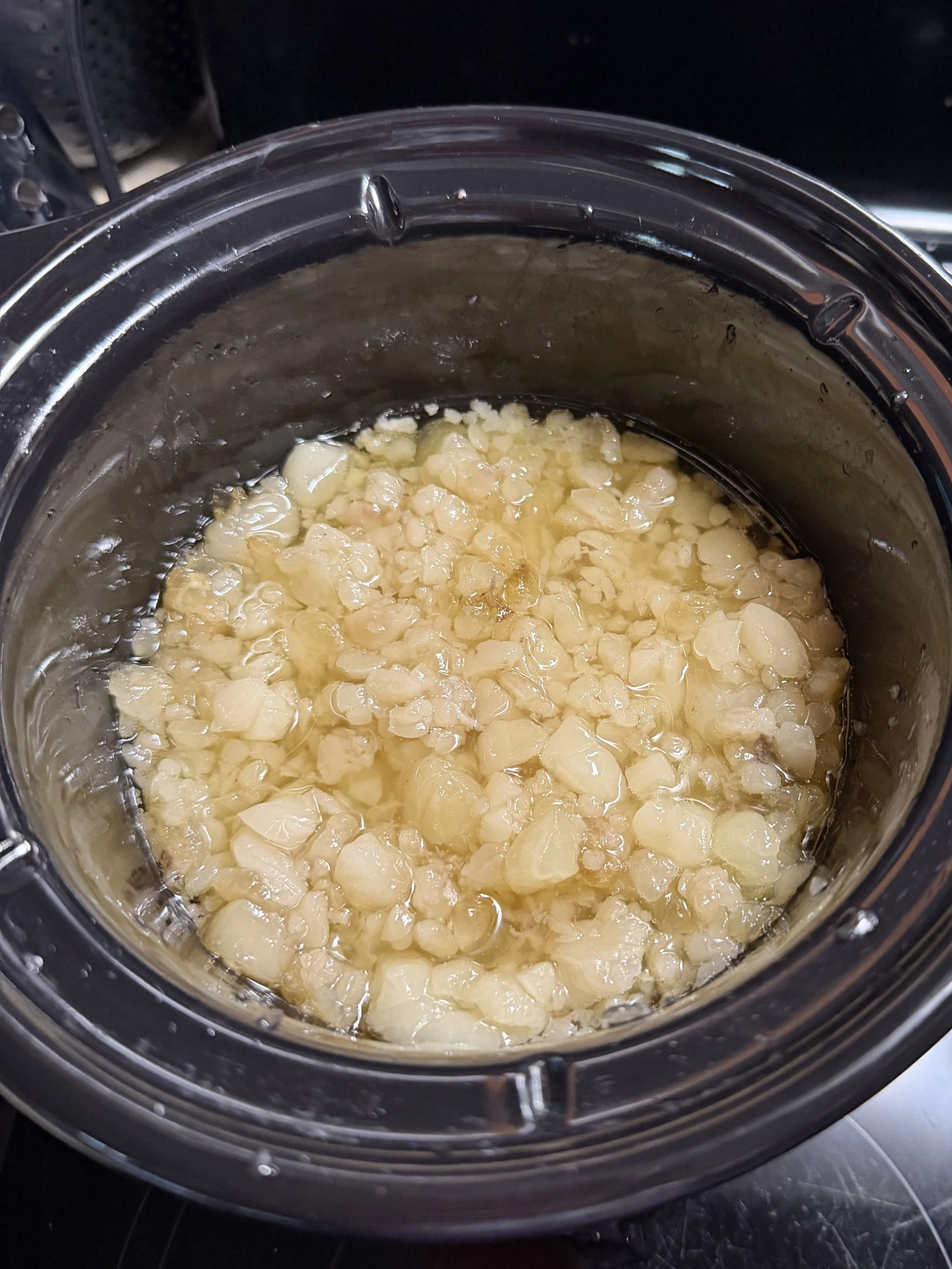
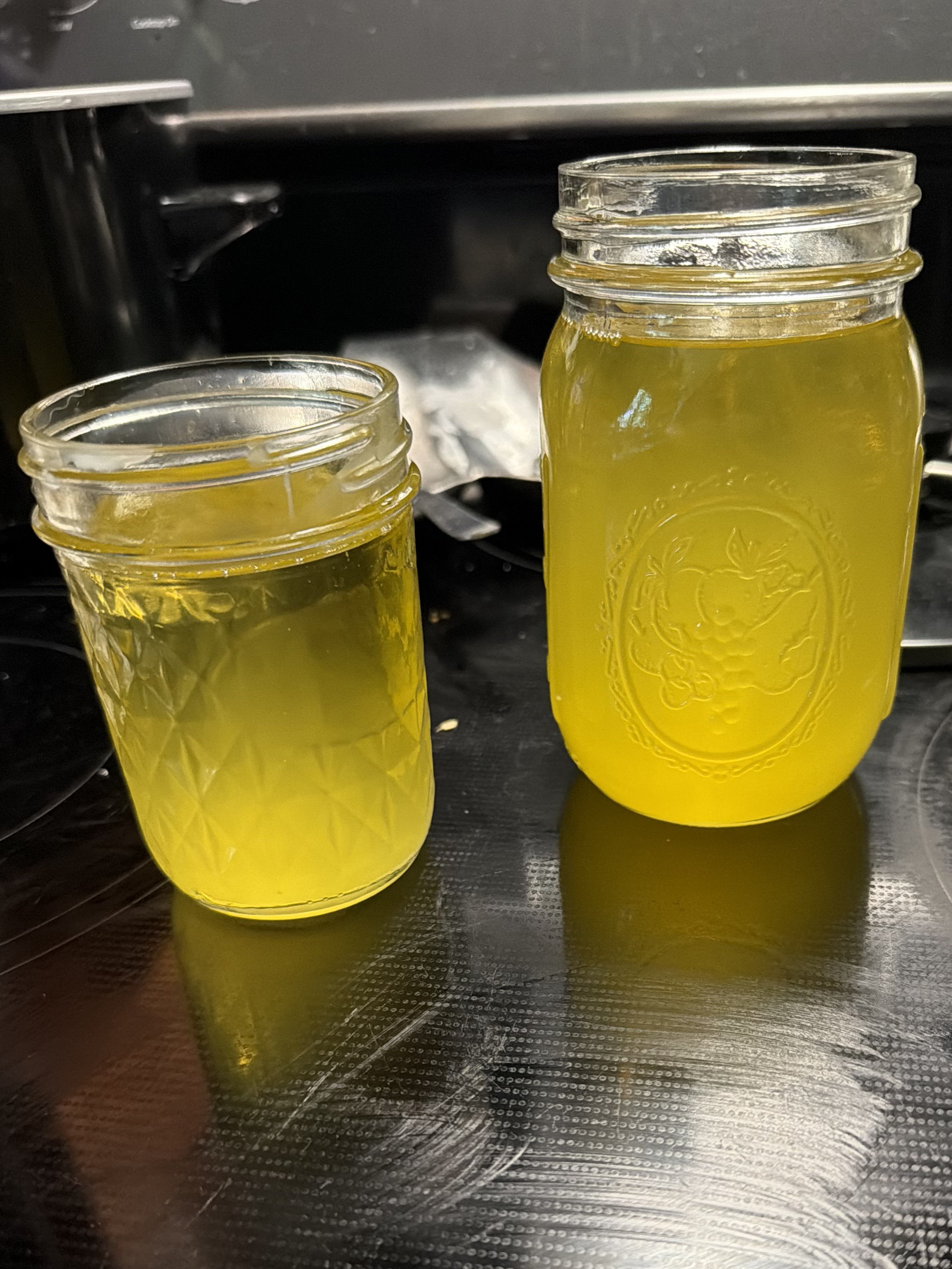
As the suet renders, you’ll notice more and more clear liquid fat collecting in the crockpot.
The process is finished when the remaining pieces have turned golden brown and most of their fat has been released.
At this point you’ll have a crockpot full of liquid tallow and crispy bits of rendered fat (often called cracklings).
Step 4: Strain the Tallow
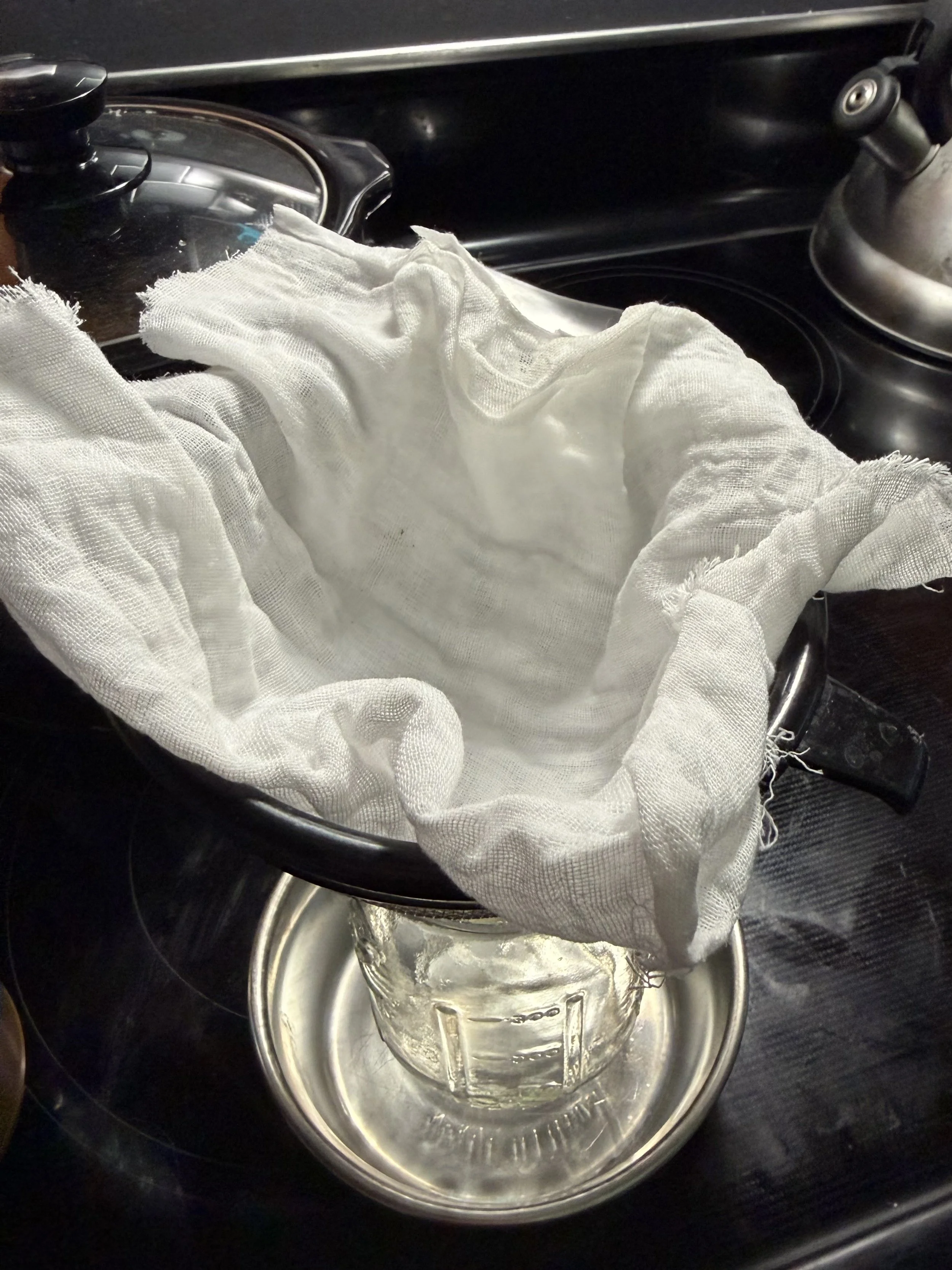
Place a fine mesh strainer over a heat-safe container and line it with cheesecloth, a coffee filter, or even a paper towel.
Carefully pour the hot tallow through the filter.
This removes small impurities and helps create a cleaner finished product.
Step 5: Optional Second Filtering
Depending on how you plan to use your tallow, you may want to repeat the process.
Simply warm the strained tallow until liquid again and filter it a second time.
For cooking, one filtering is often plenty.
For soap making, skincare products, balms, or candles, additional filtering can help create a cleaner, more refined tallow with less natural beef aroma.
Step 6: Cool and Store
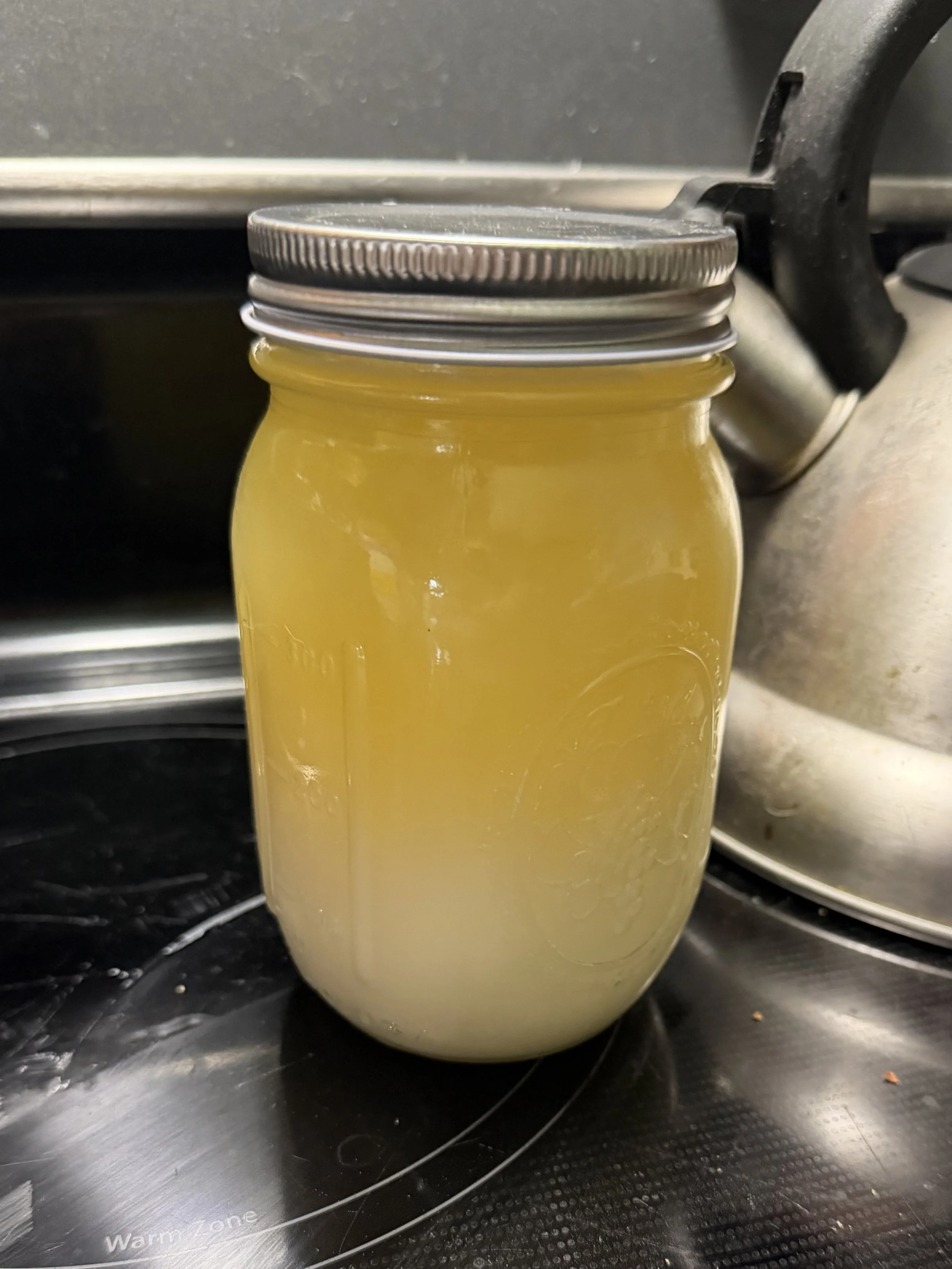
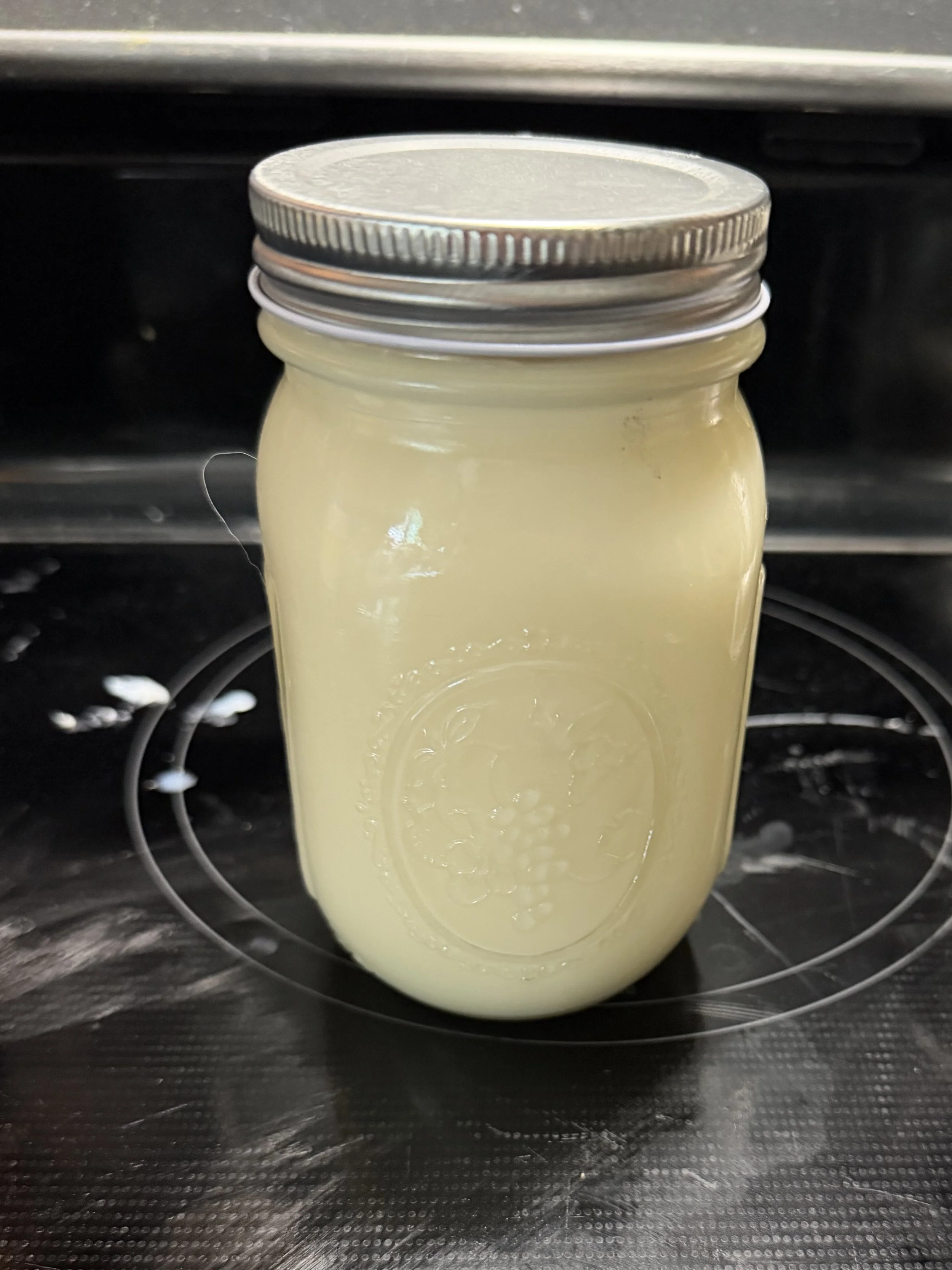
Pour the strained tallow into clean jars and allow it to cool.
As it solidifies, the tallow will transform from a golden liquid into a smooth, creamy white fat.
Store it:
At room temperature for everyday use
In the refrigerator for longer storage
In the freezer for long-term storage
A Few Notes
A mild beef aroma is completely normal in freshly rendered tallow.
Additional filtering can help reduce the scent if desired.
The cracklings left behind after rendering are often enjoyed as a snack or added to recipes.
Properly rendered tallow keeps surprisingly well and can be used for frying, roasting vegetables, seasoning cast iron, soap making, skincare products, and more.
There’s something incredibly satisfying about turning a simple package of Lolans Farm beef suet into jars of beautiful homemade tallow. It’s an old-fashioned kitchen skill that’s easy to learn and makes use of every part of the animal-a practice we always appreciate on the farm.